
 Contact

Community
Understanding ITIL V4 Basic Concepts and Comparison with ITIL V3 (#2) – “SVS”
- Date2020.05.26
Understanding ITIL V4 Basic Concepts and Comparison with ITIL V3 (#2) – “SVS”
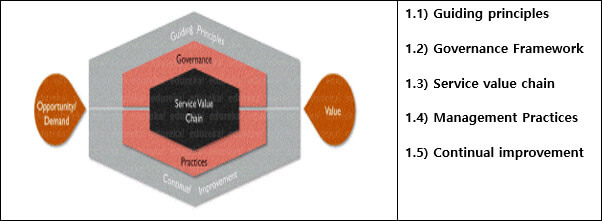
1.1) Guiding principles
Guiding principles provide direction for appropriate actions and represent universal, proven recommendations that should be followed throughout the service lifecycle. They help organizations make successful decisions and take the right actions at all levels by implementing ITIL’s core messages.
These principles guide organizations in adopting IT service management practices tailored to their specific context and needs, ensuring continuous support for successful IT service delivery.
ITIL V4 defines seven guiding principles:
①Focus on value
②Start where you are
③Progress iteratively with feedback
④Collaborate and promote visibility
⑤Think and work holistically
⑥Keep it simple and practical
⑦Optimize and automate
These principles complement other best practices and standards such as COBIT, Agile, DevOps, and Lean, enabling organizations to align IT service management with these frameworks.
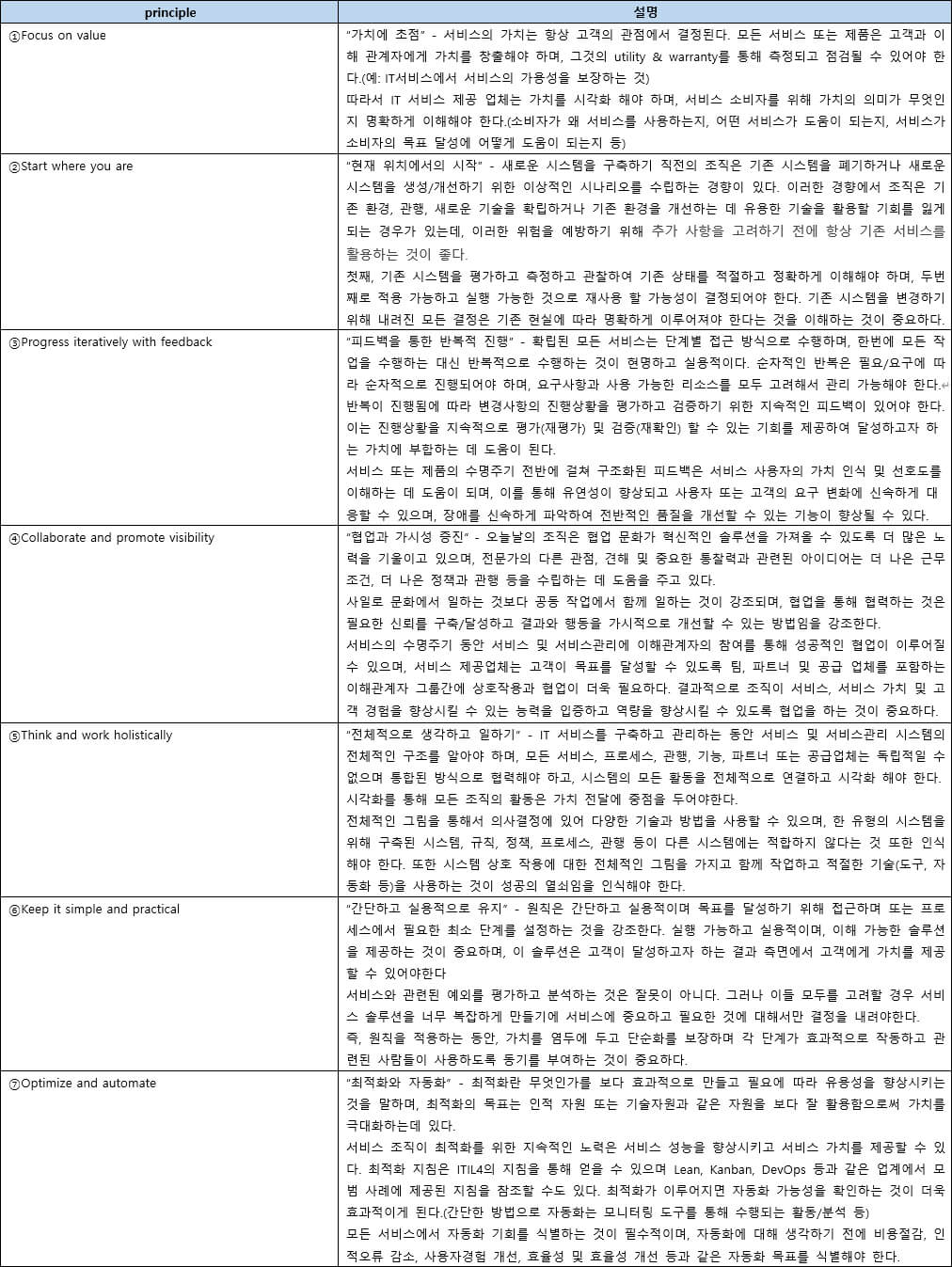
In short: focus on value, start from your current state, iterate with feedback, keep things simple and practical, and optimize and automate wherever possible.
1.2) Governance Framework
Governance provides the formal structure and mechanisms for establishing direction and control. IT governance ensures alignment between business strategies and IT services, infrastructure, and environments through processes, tools, and methodologies.
IT governance is an essential part of enterprise governance. Through established frameworks, organizations can achieve measurable outcomes and strategic objectives. ITIL 4 complements governance frameworks such as COBIT.
① Key Governance Activities:
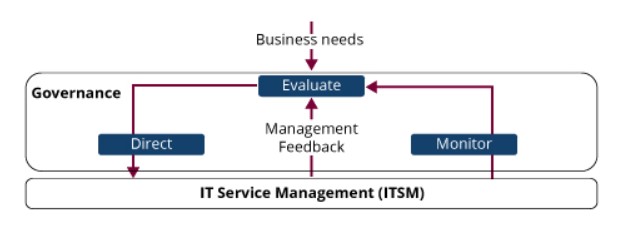
- Evaluate: Assess organizational strategy, portfolio, and relationships to meet stakeholder needs and adapt to changing environments.
- Direct: Define responsibilities, prepare and implement strategies and policies to guide organizational activities and investments.
- Monitor: Continuously monitor performance, processes, and services to ensure compliance with established guidelines.
② Governance in SVS:
Governance applies across all levels of the organization and throughout the service lifecycle. Effective governance requires delegation across multiple layers, supported by guiding principles and continual improvement.
1.3) Service value chain
The Service Value Chain (SVC) is the core of SVS, comprising six key activities that enable value creation through services and outcomes. ITIL’s SVC is flexible enough to adapt to various approaches, including DevOps and centralized IT.
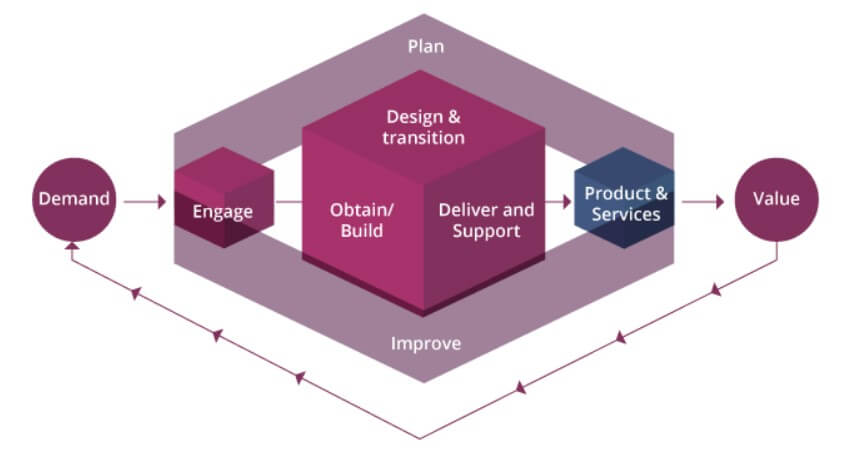
The six activities are:
① Plan
Align services and products with organizational vision and objectives. Ensure understanding of vision, current state, and the four dimensions of service management..
② Improve
Continuously enhance processes, practices, services, and skills. Improvements must consider all four dimensions of service management.
③ Engage
Build and maintain stakeholder relationships to ensure value realization. Value must always be defined from the customer’s perspective.
④ Design & Transition
Design and transition services/products to meet stakeholder expectations for cost, quality, and time. Consider all four dimensions: people/organization, information/technology, value streams/processes, and partners/suppliers.
⑤ Obtain/Build
Acquire and build resources according to architectural specifications, ensuring continuous testing until requirements are met.
⑥ Deliver & Support
Provide services/products throughout their lifecycle, ensuring value realization and identifying improvement opportunities.
Each activity interacts with others to create value streams, supported by processes, practices, and resources.
1.4) Management Practices
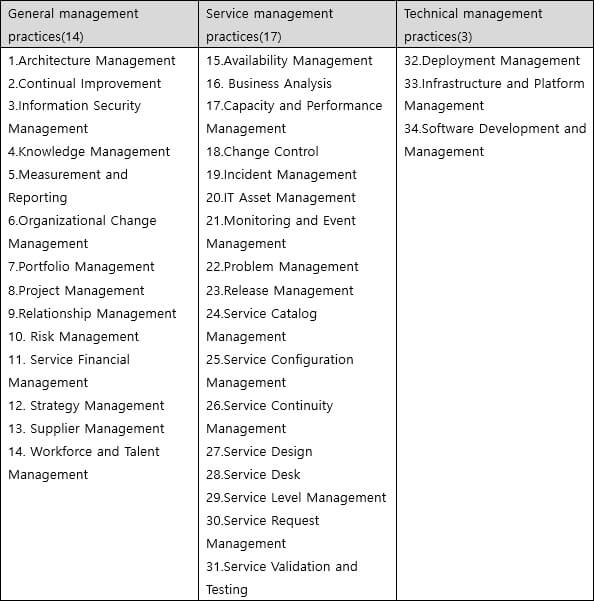
ITIL 4 defines 34 practices to support service design, transition, build, testing, delivery, and support. These practices incorporate concepts from DevOps, Agile, and Lean.
They are grouped into three categories:
① General Management Practices (14): Apply across the organization for overall success.
② Service Management Practices (17): Apply to specific services developed and delivered in organizational environments.
③ Technical Management Practices (3): Adapted from technical management to support service management objectives.
(Detailed explanation of each practice will follow in the next article.)
1.5) Continual Improvement
The purpose of Continual Improvement is to ensure that services and products remain consistently aligned with business needs. Overall improvement results from actions taken at all levels, so visibility into the service environment is essential. People, processes, suppliers, IT infrastructure, and applications must all contribute to value co-creation.
① Seven Steps of Continual Improvement:
Continual Improvement uses a seven-step model, as shown below, which provides the approach necessary for ongoing improvement and applies across the entire SVS.
(This model has been guided since ITIL V3.)
Reference: AXELOS® ITIL4 publication.
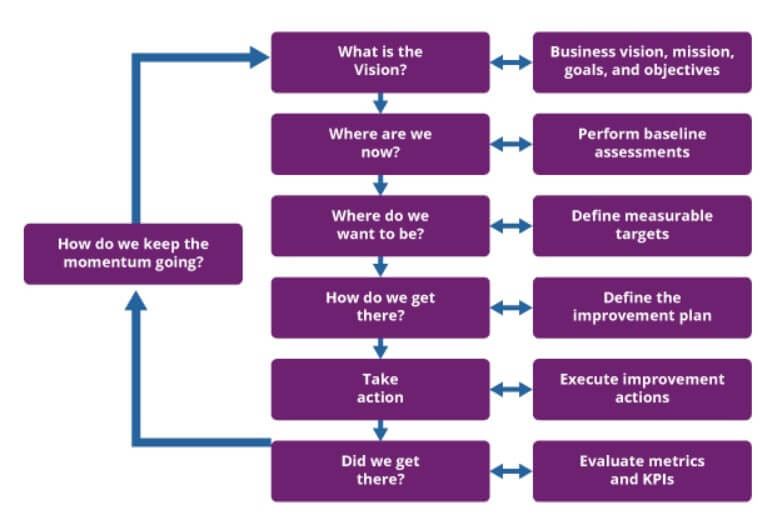
(Figure: Seven-step improvement model)
As illustrated, continual improvement begins with understanding the organization’s vision and continues through actions and evaluations, focusing on taking improvement measures regardless of performance outcomes. Even when goals are achieved, improvement should continue; when goals are not met, efforts must persist to drive improvement.
② Continual Improvement and Guiding Principles
- Continual improvement of services and service performance must effectively apply ITIL’s guiding principles to deliver significant business benefits. Every step in the improvement model is critical, and all improvement plans must consider the seven guiding principles introduced earlier in section 1.1.
We have now introduced the five key components of ITIL V4’s Service Value System. While this summary may seem complex, understanding these concepts and reviewing ITIL V4 documentation will provide deeper clarity.
Consulting Services Team, Solution Business Division, STEG Inc.
*Next: ITIL V4’s 34 Management Practices