
 Contact

Community
ITSM and Executing ITSM Projects #1
- Date2020.06.29
IT Service Management, commonly referred to as “ITSM,” is a term that anyone working in IT has likely heard at least once. Even those outside the IT field may have experience using an ITSM system or a similar information system, as these systems have become an integral part of everyday business operations.
If you have never heard the term ITSM or used such a system, there is no need to be discouraged. Chances are, you have unknowingly played a role within the broad ITSM domain.
In my years of consulting and implementing ITSM systems, I have rarely encountered an organization without at least some ITSM-related procedures or systems. The only difference is that many organizations do not realize that the processes and systems they use are part of ITSM.
Despite ITSM becoming an essential concept and tool for managing IT-related tasks today, clearly defining ITSM’s objectives and explaining how it should be applied and operated in practice is not easy.
Therefore, this article aims to clarify what ITSM and ITSM systems mean, their role and position within IT, and how ITSM is implemented. Based on years of real-world project experience, I will share insights from basic concepts to practical procedures and systems used in ITSM projects. I hope this article helps organizations considering ITSM adoption and professionals working in ITSM.
One of the most frequently asked questions I’ve encountered from clients over the years is:
“What is the difference between ITIL, ITSM, and ISO/IEC 20000?”
In simple terms:
- ITSM refers to an industry-standard concept that supports the entire IT service lifecycle—design, management, implementation, application, and operation—unlike traditional IT management focused solely on infrastructure.
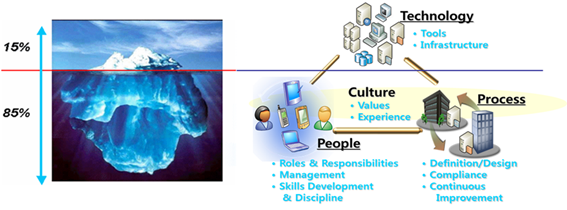
- ITIL is a best-practice framework for ITSM, defining the relationships among three components (people, processes, technology) to provide customer-centric, business-focused, and process-oriented guidance.
- ISO/IEC 20000 is the international standard for ITSM.
In short, ITSM emerged from the need to move beyond fragmented IT management approaches for servers, networks, and applications, toward standardized processes and service-oriented infrastructure management.
Accordingly, ITIL—the best practice for ITSM—focuses on aligning IT with business needs, reducing costs, and improving IT service quality, with particular emphasis on relationships among IT organizations, customers, and partners.
Why Has ITIL Become a De Facto Standard?
Although ITIL is not the only ITSM standard or guideline, it has become widely recognized as the practical standard in the IT industry, almost equivalent to ISO/IEC 20000. This prominence stems from two key characteristics:
1. ITIL is non-proprietary.
ITIL service management practices apply to all IT organizations, regardless of technology platforms or industries, and are not tied to commercial practices or solutions.
2. ITIL is non-prescriptive.
ITIL is a framework to be adopted, not strictly complied with. Compliance requires formal audits and rigid adherence to externally defined practices, whereas adoption allows flexibility to tailor practices within the organization while maintaining the overall framework structure.
During ITSM projects, I often hear questions like:
“Our organization consumes IT services rather than provides them. Isn’t ITIL only for outsourcing vendors?”
or
“ITIL requirements don’t seem to fit our organization. How should we apply them?”
These questions arise from misunderstanding ITIL’s two characteristics. In reality, most organizations are both providers and consumers of IT services. ITIL applies to all IT organizations, and since it is adopted—not enforced—you do not need to implement every requirement exactly as written.
In other words, ITIL best practices are not permanent. Over time, best practices become common practices and are replaced by new ones. ITIL combines common practices with best practices, much like a bestseller eventually becoming a steady seller or giving way to a new bestseller.
So far, we have reviewed the basic concepts of ITSM and ITIL as its best practice framework. In the next article, we will explore the value ITIL proposes in greater detail.