
 Contact

Community
Understanding the IT Planning Domain Through ITSM
- Date2020.12.28
Understanding the IT Planning Domain Through ITSM
STEG understands the service processes within the IT planning domain of enterprises and provides flexible IT planning processes through its ITSM solution. Unlike the numerous processes defined in ITIL, IT planning requires an approach that considers its unique procedures and organizational culture. To fully grasp IT planning, one must understand its meaning, basic accounting principles and terminology, and the flow from business strategy to mid- and long-term planning, IT budgeting, and project execution.
This article is intended to help those new to IT planning or developers implementing IT planning processes through ITSM gain a clearer understanding of this domain.
What Does “Planning” Mean?
The dictionary defines planning as “to devise and organize work.”
In essence, planning is a higher-level concept than a plan. A more detailed definition is: “Identifying the purpose of changing a target and designing the most suitable actions to achieve that purpose.” A plan, therefore, is the result produced through planning.
Applying this definition to corporate planning departments:
Most companies aim to generate profit. To achieve this, they establish business strategies and policies, develop business plans, and execute them. Corporate planning departments handle these tasks, and understanding their work often requires knowledge of basic accounting principles and terminology.
Basics of Accounting
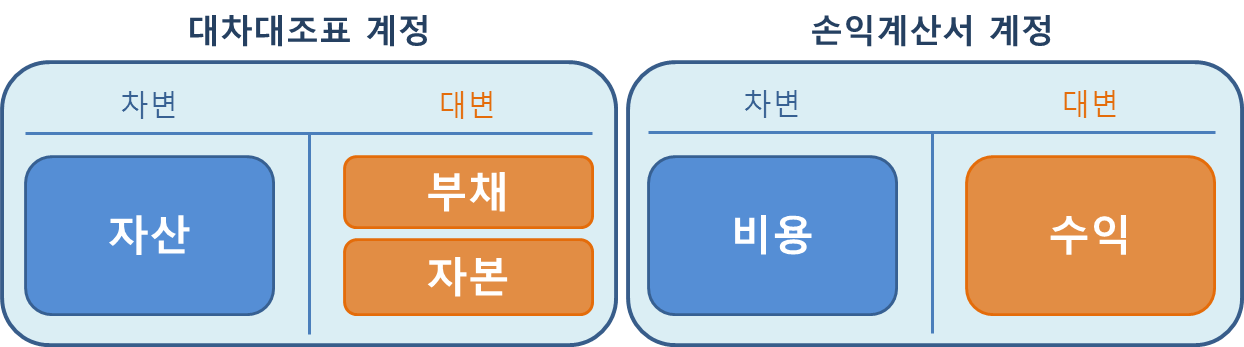
Accounting records and organizes changes in a company’s assets resulting from business activities according to established principles and communicates this information to stakeholders. These changes are recorded using accounts, which are grouped into five categories: assets, liabilities, equity, revenue, and expenses.
Each account is further divided into account titles (e.g., cash and deposits under assets). Transactions are recorded according to specific rules called journal entries, which are compiled periodically (monthly, quarterly, annually) into ledgers—a process known as closing.
From these, companies prepare financial statements:
- Balance Sheet: Shows financial position at a specific point in time (assets, liabilities, equity).
- Income Statement: Shows performance over a period (revenues and expenses).
These reports are then provided to stakeholders.
Planning vs. Accounting
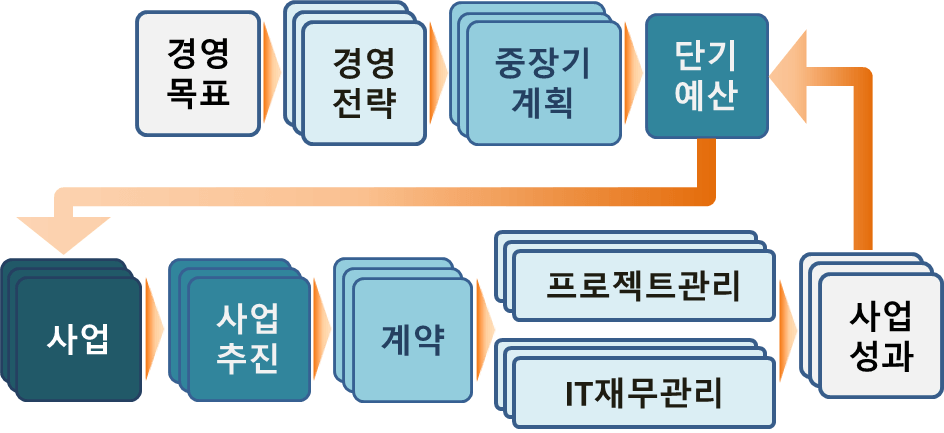
While accounting deals with past events, planning focuses on future actions. Companies create budgets for income and expenses by account, based on short- and long-term strategies. IT planning follows this flow: starting from business strategy, moving to mid- and long-term plans, IT budgets, and projects, which then connect to IT financial management and project management.
Planned budgets and project details transition into execution, and results are evaluated and analyzed to identify improvements for the next cycle. This cycle of planning, execution, and feedback helps achieve business goals and is itself part of strategic management—thus falling under IT planning.
How Should ITSM Approach IT Planning?
The key is to focus on ITSM’s core—managing the IT service lifecycle—rather than financial details like vouchers or accounting entries. Financial aspects are already handled by specialized systems such as ERP. Clients do not expect ITSM to function as a financial system.
Instead, ITSM should manage the planning cycle described above. If design and implementation focus on this, both clients and service providers can achieve successful outcomes.
I hope this article provides some clarity on terms like budgets and accounts, as well as the concept of planning, for those designing and implementing ITSM systems.
Lee Jun-Hyuk, Deputy General Manager, PS2 Team, Solution Service Division, STEG Inc.