
 Contact

Community
Case Study: Implementing Computer Equipment Request Management Using ITSM
- Date2021.01.07
Case Study: Implementing Computer Equipment Request Management Using ITSM
This article presents a case from STEG’s ITSM implementation portfolio, specifically the project at Daewoo Shipbuilding & Marine Engineering (DSME) that utilized ITSM to establish processes for requesting, handling, and managing computer equipment. DSME had been using an ITSM system for 10 years, but due to system obsolescence and difficulty meeting user requirements, it initiated an ITSM redevelopment project. I was responsible for the computer equipment request management portion within the project scope and will explain the implementation process.
Before improvement, computer equipment requests were made through informal communication, and management information was handled manually. Field users frequently requested equipment, and administrators manually updated management information, leading to inconvenience, omissions, and significant effort.
To address these issues, we improved related processes and implemented enhanced system procedures. The new ITSM system integrated computer equipment request and handling into the service request process, providing unified and standardized workflows. By including equipment requests in ITSM’s integrated request management process, users could easily submit IT-related requests, including equipment, through the ITSM request menu and check processing status and history, improving convenience.
The design and implementation of the computer equipment request/handling process were defined as follows:
1) Define equipment types to manage (typically PC, monitor, laptop, printer, scanner, software, consumables, etc.). Add new types as needed.
2) Define equipment storage locations (for returned, newly introduced, unused, or disposal-pending equipment).
3) Establish roles and responsibilities (R&R) and process definitions:
- Processing Manager: Receives requests, verifies work performed, and checks updates in CMDB and asset management systems.
- Executor: Handles assigned tasks such as lending, issuing, returning, or replacing equipment.
- Process flow: Request → Approval → Receipt → Processing → Verification → Update CMDB, Asset Management System, SAP → Closure.
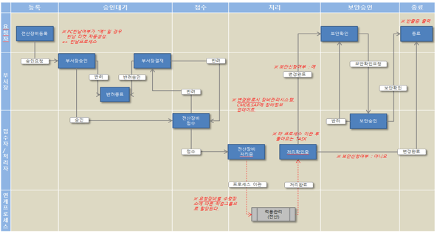
[Figure 1. Computer Equipment Request/Processing Workflow]
Next, let’s illustrate the steps for handling a single equipment request with example screens:
Equipment Lending
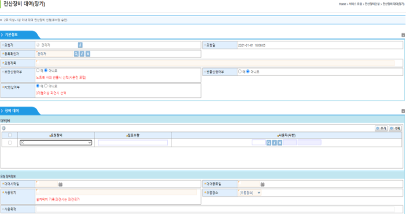
[Figure 2. Equipment Lending Request]
Equipment Issuance
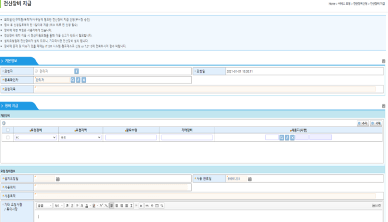
[Figure 3. Equipment Issuance Request]
Equipment Replacement/Return
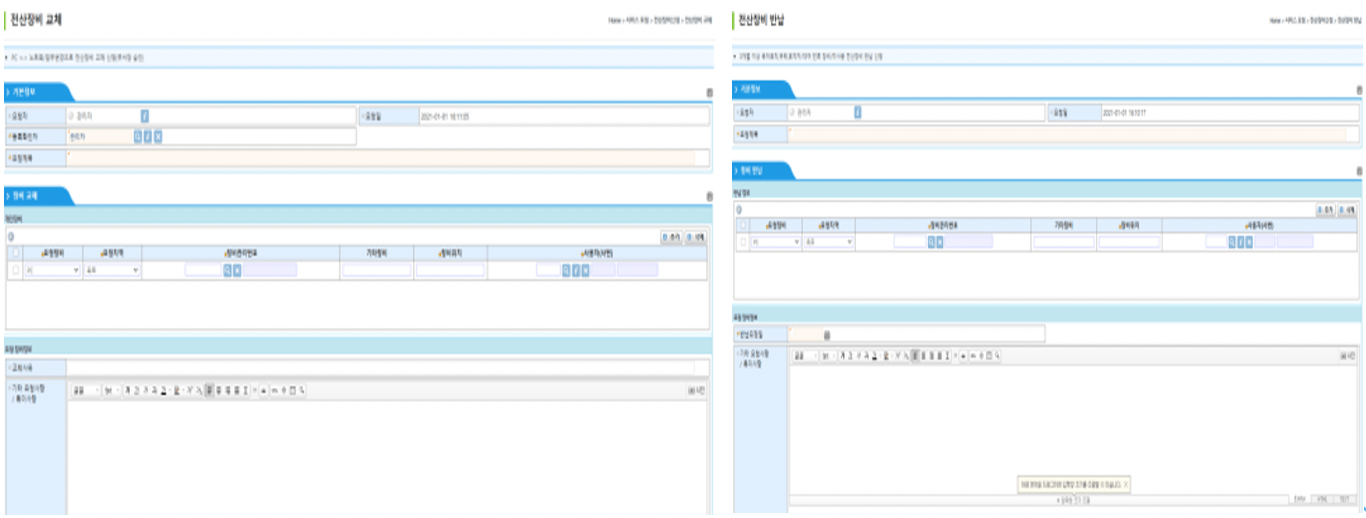
[Figure 4. Equipment Replacement/Return Request]
Requesters enter details such as requested equipment, items to replace or return, and user information.
There are four request types in the process, with “Equipment Lending/Issuance” requiring management values like equipment type, quantity, user, and usage period. The most critical point is the “usage period,” which triggers return notifications when expired. For replacement/return requests, details such as equipment type, request date, user, and location are required.
Executors process requests and continuously update management DB with history and changes. The DB provides information on which request caused changes to user, location, usage period, and issuance/return dates, enabling efficient management and preventing equipment loss.
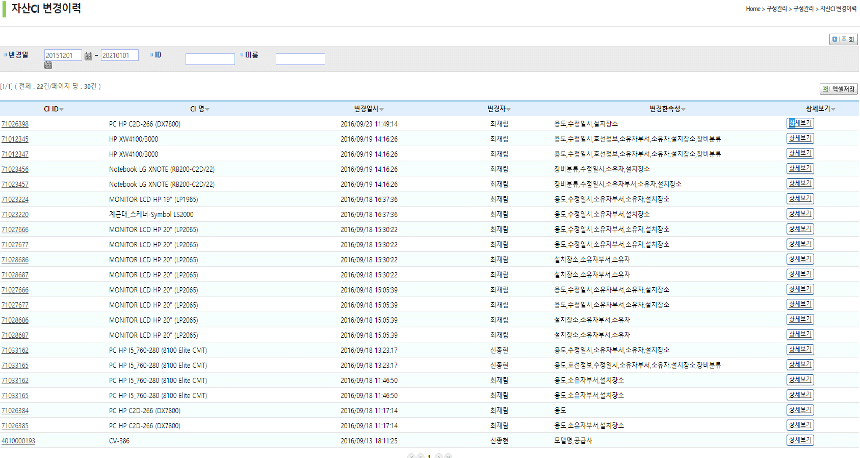
[Figure 5. Asset CI Change History]
By implementing these procedures and functions, we achieved traceability, up-to-date asset information, and standardized workflows. Users no longer need to make informal requests, and administrators benefit from reduced workload, improving mutual satisfaction.
Continued use and process refinement are expected to reduce unnecessary equipment purchases through accurate asset information, resulting in cost savings. Additionally, future audits can be streamlined by attaching QR codes to equipment for easy verification. Administrators can select equipment type, department, and location, and notify users to scan QR codes for convenient audits.
This case demonstrates that ITSM can be effectively applied to simplify and standardize computer equipment management, which is often challenging for organizations.
Shin Jong-Hyun, Assistant Manager, R&D Division, Solution Research Lab, STEG Inc.