
 Contact

Community
2022 IT Keywords and Their Integration with the EGENE Platform
- Date2022.11.02
2022 IT Keywords and Their Integration with the EGENE Platform
In the 21st century, all areas around us are rapidly changing due to various factors such as environment and culture.
Keeping pace with these changes, the IT sector is also evolving quickly. Every year in the second half, Gartner, a global IT research and advisory firm, presents key technology trends for the upcoming year, offering strategic direction.
For 2022, Gartner announced 12 IT trends under three major themes—Building Trust, Shaping Change, and Accelerating Growth—in late 2021. These trends span all IT domains and diverse environments.
STEG owns the E-GENE platform, which provides software-based web applications. We analyzed how closely this platform aligns with and impacts this year’s technology trends across five key areas.
1st Keyword – Generative Artificial Intelligence
Among various AI technologies, Generative AI stands out as one of the most powerful and visible. These AI services are deeply integrated into everyday life. At STEG, we are strategically designing how to maximize system utilization by introducing conversational AI into the E-GENE platform.
One reference case is the integration of a chatbot feature for Seoul National University.
End-users at Seoul National University improved convenience by creating service request tickets through chatbot-guided workflows based on request classification.
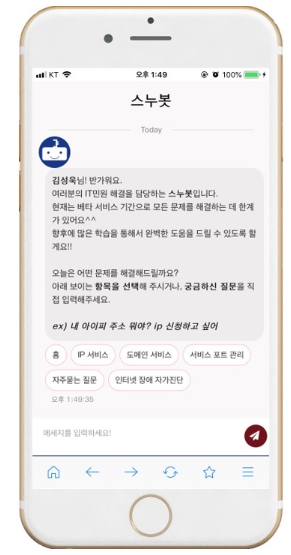
[Figure 1 – Seoul National University Chatbot UI]
To maximize effectiveness, we considered conversational AI with chatbot functionality, enabling intelligent interactions tailored to user perspectives and contexts. Beyond predefined responses, the system can autonomously generate options based on environmental factors.
For example, if a user enters only “system login failure” in the ITSM conversational AI interface, the system can suggest relevant systems based on asset information maintained by the client. After selecting the affected system, the platform automatically fills in required request details and generates a ticket.
Additionally, users receive full process flow, responsible personnel information, and estimated processing time via ITSM, enhancing convenience, intuitiveness, and satisfaction.
In the long term, leveraging big data can quantify hidden areas, enabling proactive adaptation to IT workflow changes and creating positive synergies.
Looking ahead, we envision a future where our solution can automatically generate processes based on user-selected keywords from platform data.
2nd Keyword – Total Experience (TX)
Total Experience (TX) refers to a business strategy combining customer experience, employee experience, user experience, and multi-experience. The E-GENE platform can be considered a true TX system.
STEG does more than sell platforms—it integrates corporate culture and user requirements, reflecting shared project experiences into the system. This includes enhancements in content, UI, processes, and hybrid app delivery. Since its launch, E-GENE has embodied the collective experience of numerous clients and tens of thousands of users.
Recently, ITSM implementations have expanded toward BSM (Business Service Management) to automate as many business and IT processes as possible. Beyond ITSM, we have collaborated with clients to extend into areas such as ESH (Environment, Safety, Health).
As all business operations increasingly integrate with IT, STEG leverages years of diverse reference experience to guide prospective clients. To maximize platform usability, we provide essential modules like reporting and document viewers as plugins.
3rd Keyword – Distributed Enterprise
Technological advancements and environmental factors like COVID-19 have driven remote and hybrid work cultures, shifting IT projects toward remote work and away from on-site models.
Consequently, distributed enterprise structures—where companies operate with dispersed workforces—are expanding. STEG embraces this positive change by adopting cloud servers, expanding infrastructure, and utilizing video conferencing and remote inspections to enhance operational efficiency, including client services.
4th Keyword – Composable Applications
Composable applications refer to systems built from modular components, offering flexibility to adapt to environmental and regulatory changes. Many companies seek such adaptable systems, and solution providers like STEG have spent 2022 under the banner of “low-code” and “no-code.”
STEG ensures that even users without technical expertise can easily use solutions or create new applications via the E-GENE platform. Modules such as Relation, List, SQL, and Form Designer have been improved for intuitive use through clicks and drag-and-drop actions.
A prime example is the Relation module, previously accessible only to developers familiar with relational database structures. It has evolved into the Relation Wizard for all users.
Relations represent 1:N or N:N data modeling structures, frequently required in complex business environments. The Relation Wizard provides intuitive options, simplifying the initial modeling process.
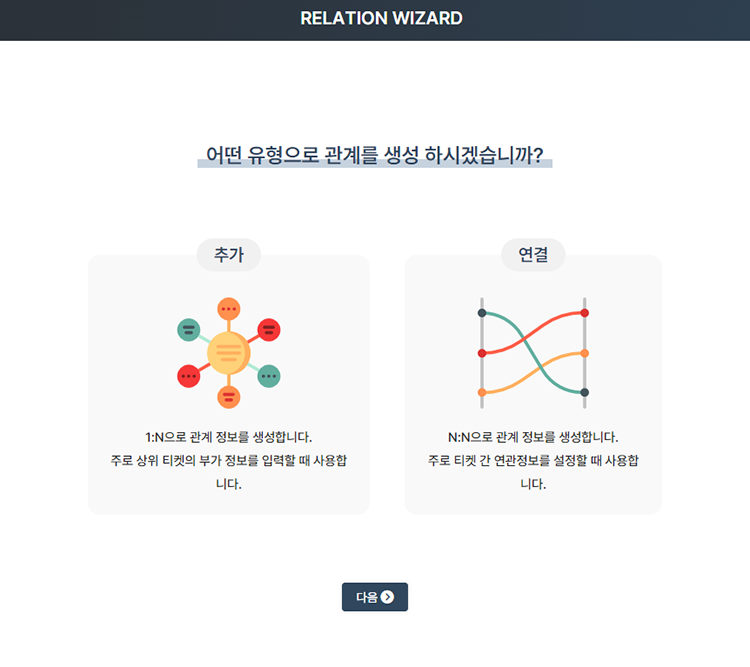
[Figure 2 – Relation Wizard Initial UI]
Without direct DB client access, the wizard creates physical tables aligned with relational database standards. Even without knowledge of primary keys (PK) or foreign keys (FK), users can automatically configure relational structures and customize them easily via drag-and-drop.
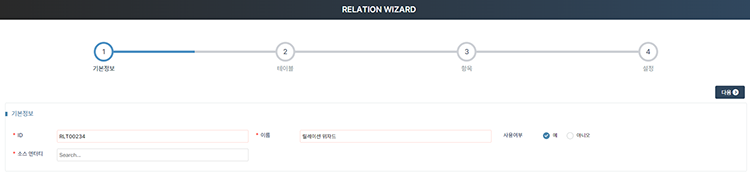
[Figure 3 – Relation Wizard Process UI by Type]
After completing the Relation Wizard process, users can configure the final UI using the List Manager, setting grid positions, data extraction, ATOM, Excel downloads, and more.
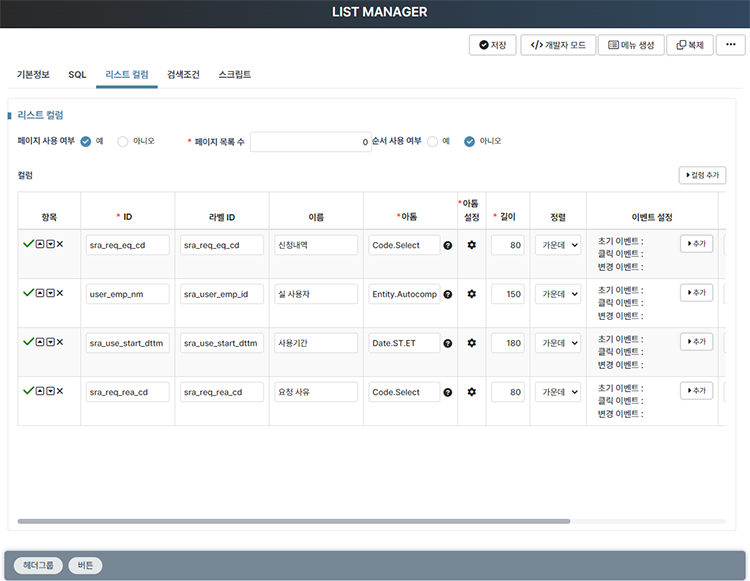
[Figure 4 – List Manager UI]
By linking Relation Wizard and List Manager outputs, users can create relational structures without knowing database, CSS, or JSON syntax.

[Figure 5 – User Perspective UI Linking Relation and List]
5th Keyword – Hyperautomation
Businesses must integrate IT processes into all areas to maximize operational efficiency.
Teams adopt systems tailored to their workflows, and E-GENE extends beyond ITSM to two major areas:
1. BSM (Business Service Management) – Expanding business models for convenience. Demand for BSM has grown due to regulatory and environmental factors. STEG has been active in this space since implementing the Incheon Airport tenant service portal eight years ago.
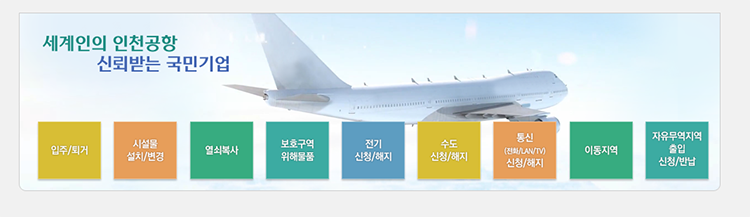
[Figure 6 – Incheon Airport Tenant Service Portal UI]
Recently, we developed an internal platform called DCatGene—a pet-focused social network connecting and sharing all information about pets and their owners.
2. PMS (Project Management System) – Growing demand for comprehensive project management. E-GENE offers features based on project management methodologies, including WBS, workflow management, and requirements tracking. Recent deployments include Heungkuk Life, Heungkuk Fire, and Busan Bank, with more PMS references expected in 2023.
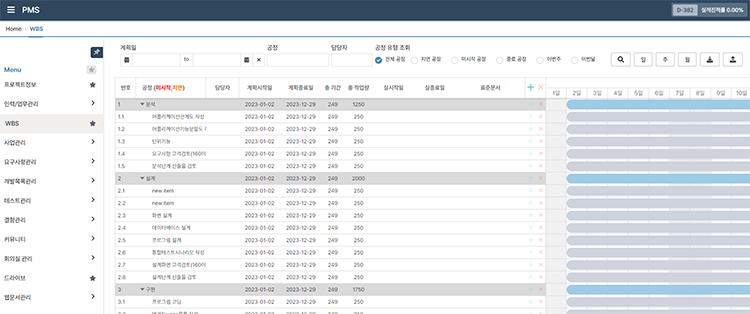
[Figure 7 – PMS WBS UI]
The author compared five Gartner technology trends with STEG’s E-GENE platform. STEG continues to integrate and advance these technologies within E-GENE, evolving into a platform that embraces diverse IT trends and adapts to rapid market changes.
Ahn Hyo-jung, R&D Team, STEG Inc.