
 Contact

Community
E-GENE Solution for SaaS-Based Multi-Tenancy Services
- Date2023.12.21
E-GENE Solution for SaaS-Based Multi-Tenancy Services
STEG provides ITSM services in both On-Premises and SaaS models by leveraging the no-code platform-based E-GENE solution tailored to meet enterprise needs. Through ITSM service delivery to numerous public institutions, financial organizations, large enterprises, and mid-sized companies, we have provided diverse IT services and improved operational efficiency. The On-Premises service model requires significant time for development and system implementation, along with ongoing maintenance costs. Consequently, the demand for SaaS-based ITSM services—offering fast, easy, and cost-effective access—continues to grow. To address this need, this article introduces a case study of implementing a multi-tenancy architecture using SaaS-based E-GENE solution. Multi-tenancy is an architectural approach where a single instance serves multiple customers.
Two critical methods were applied to build and deliver multi-tenancy:
First, we utilized E-GENE’s metadata entity management, workflow management, menu management, workgroup management, and code management features. A dedicated field was added to manage customer codes, enabling control through code values. Second, for core ITSM processes—such as Service Request Management, Incident Management, Change Management, Problem Management, and Configuration Management—we created separate tables for each customer to prevent security issues. To provide ITSM services with customer-specific metadata, we implemented a “Customer Service Registration” feature. After a customer signs up on the E-GENE Cloud Portal, the E-GENE Administrator accesses the console and uses the customer service management function to create the service.
Below is an overview of the customer service creation process and related features:
When a customer service is created, a unique customer code is generated. Based on this code, organizational information, ITSM-related metadata, and physical tables for process data management are created.
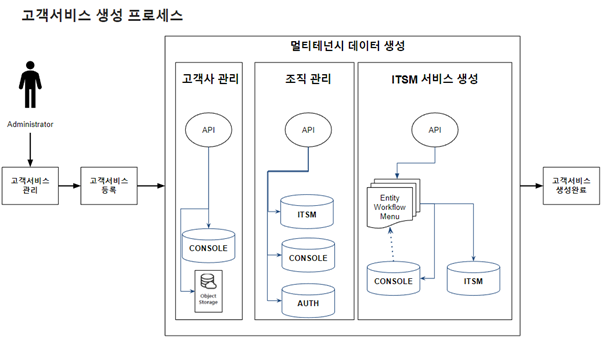
[Figure 1] Customer Service Creation Process
To register a customer service, the following information is required: Customer Name, Domain, and Service Type. The domain specifies the customer’s domain information. After selecting the service type and saving, organizational data, process management information, reference data, and a bucket for file attachments are created.
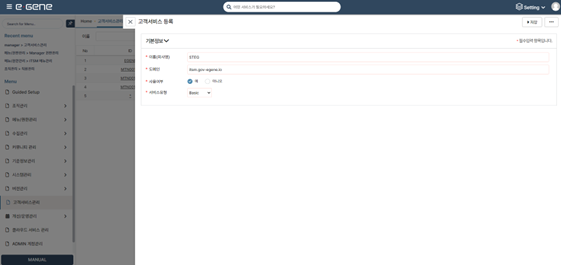
[Figure 2] Customer Service Registration Screen
After registration, the customer administrator can log in and access the portal. The portal provides features for managing organizational data, workgroups for process handling, reference data such as service request classifications, and other ITSM service management functions.
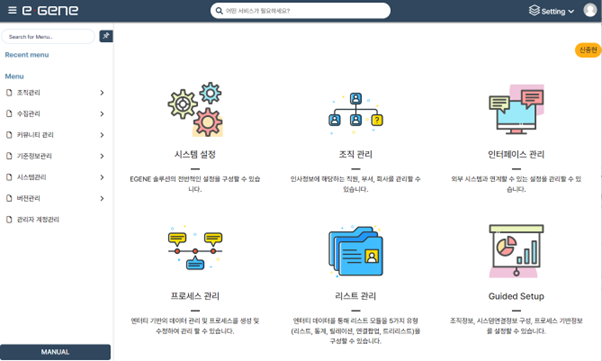
[Figure 3] Customer Administrator Portal
A dedicated administrator console is created for each customer. It offers workflow management for Service Request Management, Incident Management, Infrastructure Change Management, Application Change Management, Problem Management, and Configuration Management.
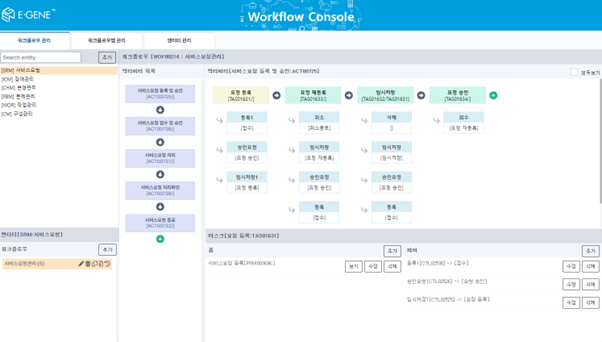
[Figure 4] Customer Administrator Console
Each customer has a dedicated bucket for managing physical attachment files registered in ITSM services.
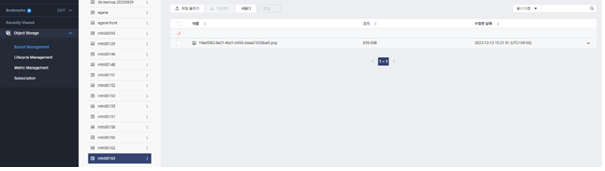
[Figure 5] Customer Bucket
By accessing the domain entered during registration and logging in as an ITSM user, customers can access the ITSM portal. The portal provides processes such as Service Request Management (SR), Incident Management, Problem Management, Infrastructure Change Management, Application Change Management, and Asset Management.
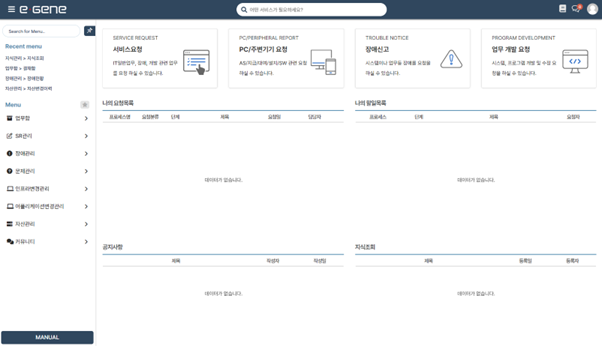
[Figure 6] Customer ITSM Service Portal
This case study demonstrates how E-GENE implements multi-tenancy architecture in a SaaS environment for ITSM services. It highlights key features and applied functions that allow flexible ITSM service delivery—even for enterprise customers with multiple subsidiaries.
Shin Jong-hyun, R&D Team, STEG Inc.