
 Contact

Community
ITSM ↔ GitHub Integration for Change Control and Compliance with the New External Audit Law
- Date2021.12.22
ITSM ↔ GitHub Integration for Change Control and Compliance with the New External Audit Law
As the scope of internal accounting management systems expands, proactive compliance with the new external audit law has become essential for listed companies. With IT systems playing an increasingly significant role in corporate operations, audit requirements for IT General Controls (ITGC) under the new law have intensified. Consequently, more companies are seeking ITGC solutions through ITSM systems integrated with configuration management tools.
In this article, I will share a case from the VNTG ITSM enhancement project, where we strengthened change control and audit compliance by integrating GitHub with our E-GENE ITSM system.
1. GitHub Issue
In GitHub, an Issue refers to any problem or task that arises during a project. It serves as the starting point for managing all project-related issues.
2. Conditions for Creating a GitHub Issue
To create an Issue using GitHub’s Create Issue API, three parameters are required:
- Token
- Owner
- Repository
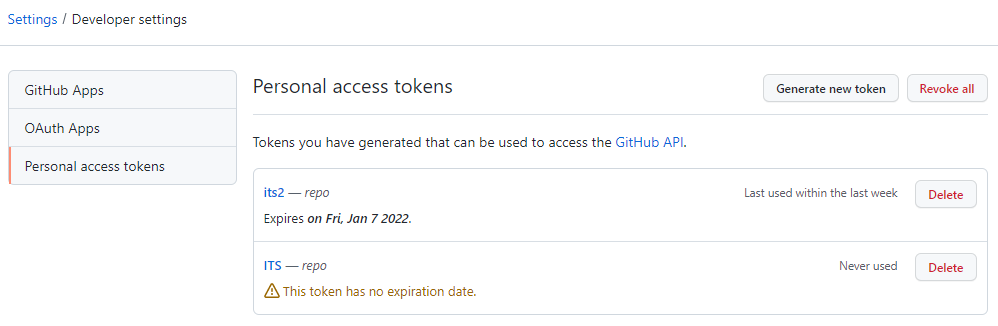
[Figure 1: Example of GitHub Token Settings]

[Figure 2: GitHub Owner and Repository]
3. E-GENE System Configuration
From the E-GENE system perspective:
- Token information is stored in the HR Master Table
- Owner/Repository information is stored in the Business System Master Table
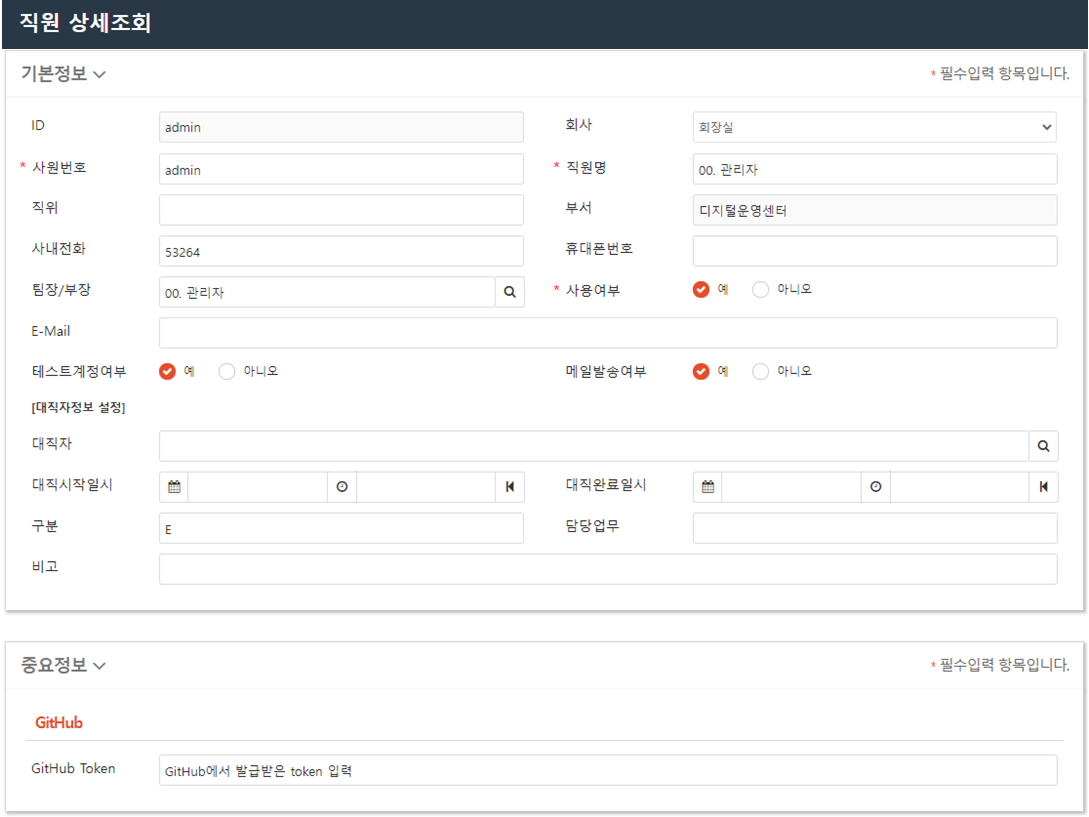
[Figure 3: Example of GitHub Token Input Screen]
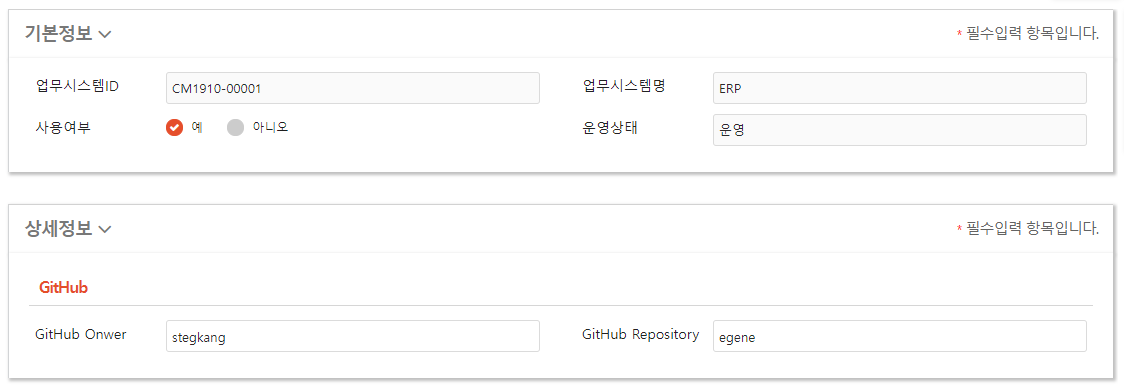
[Figure 4: Example of GitHub Owner/Repository Input Screen]
With this setup, the E-GENE system can easily create Issues by passing the logged-in user’s token and the selected business system’s Owner/Repository information as parameters. After creation, the system receives a response, but we only store minimal data—Issue ID, creation date, and GitHub User ID—for linkage management.
Benefits of Integration
This integration established a DevOps-compliant environment, improving quality and enabling ITGC compliance by tracking source change dates and deployment dates within the E-GENE ITSM system. For VNTG, this means the application lifecycle can now be managed centrally through E-GENE ITSM.
Although there were technical challenges during implementation, the key achievement was leveraging GitHub’s open-source capabilities to build this integration without additional development resources. Furthermore, this approach not only strengthened ITGC compliance but also became a valuable asset for STEG, contributing to a growing knowledge base of technical integration methods and compliance solutions.
STEG PS&P Team – Manager Seok-Hwan Kang